Saturday, 7 December 2019

The 2020 Hyundai Accent Has Big MPG Boosts in Store


The littlest Hyundai sees marked improvements in efficiency thanks to a CVT and possibly a new engine.

image
Newly updated EPA ratings show the 2020 Hyundai Accent is getting an optional continuously variable transmission (CVT).
With the new transmission, Hyundai's smallest car sees big fuel-efficiency gains.
A revised 1.6-liter four-cylinder is also possible and maybe the same Gamma II engine under the hood of the new Venue SUV.
The Hyundai Accent is one of our favourite cheap cars, and for good reason: It's refined, handsome, efficient, and actually quite fun to drive–especially the base model with the six-speed manual transmission. Its efficiency is looking even better moving into the 2020 model year, according to a new posting on the EPA's website. 
Unlike the 2018 and 2019 models, the 2020 Accent appears to drop the six-speed automatic in favour of a new CVT. Fuel-economy gains with this transmission are obvious, with the highway rating going from 38 to 41 mpg, the combined rating moving up 4 mpg to 36, and the city rating up 5 mpg to 33.

We noticed that the manual-transmission model also is in store for some fuel-efficiency gains which started us thinking: Is the Accent getting a revised engine for 2020? Hyundai is gearing up the Accent-based Venue crossover, which we know will be powered by a 1.6-liter inline-four that the company is calling Gamma II. 
The Accent's current engine–also a 1.6-liter four-cylinder–makes 130 horsepower and 119 lb-ft of torque and delivers an 8.9-second zero-to-60-mph time when paired with the outgoing six-speed automatic transmission or 7.5 seconds when mated to the six-speed manual. The Venue's powerplant is said to make only 121 horsepower and 113 lb-ft of torque, so if it ends up under the hood of the Accent we're not expecting to see improvements in acceleration time–at least, not with the manual. Nor do we expect the CVT to post quicker acceleration times than the current engine with the six-speed slushbox.


Article source: https://www.caranddriver.com/news/a27393419/2020-hyundai-accent-better-mpg/

Hyundai Kona colours explained


The Kona is Hyundai’s first small SUV. Released in 2017, with a focus on a youth audience, it makes sense that the Kona is available in an array of vibrant colours.
The Kona (which, by the way, is named after a region of Hawaiian coast) has had a meteoric rise since its launch in late 2017, and is now the sixth most popular small SUV, commanding almost 10 per cent of all sales in the segment. 
It received a mild update for the 2019 model year, which introduced a new base-model Go variant.
While many colour options are available, the choices are limited by the grade of Kona chosen.
In total, the Kona is offered in nine shades: ‘Acid yellow’, ‘Blue Lagoon’, ‘Ceramic blue’, ‘Chalk white’, ‘Dark knight’ (grey), ‘Lake silver’, ‘Phantom black’, ‘Pulse red’ and ‘Tangerine comet’ (orange).
The Kona in 'Dark knight'.
The Kona in 'Blue lagoon'.
The Kona in 'Ceramic blue'.
The Kona in 'Pulse red'.
The Kona in 'Tangerine orange'.
The Kona in 'Tangerine Orange'.
The Kona in 'Chalk white'.
The Kona in 'Lakeside silver'.
The Kona in 'Phantom black'.
‘Tangerine comet’, ‘Dark knight’, ‘Pulse red’ and ‘Acid yellow’ are only available on the top two grades, the  Elite and Highlander.
Meanwhile, ‘Lake silver’ replaces ‘Dark knight’ on the lower Active and Go grades. All colours except for ‘Chalk white’ are optional across the range.
Only the Highlander can be optioned with a ‘Phantom black’ contrasting roof with every colour except for ‘Dark knight’. Optioning the two-tone roof comes at no cost but removes the Kona’s sunroof. This means the Highlander is available in a total of 22 colour schemes.
Common colours not available on the Kona are brown, green, pink or purple. Unusually, there is also no light silver shade. 
Hyundai tells us the most popular colour for the Hyundai Kona so far is ‘Chalk white’ which this year makes up almost 30 per cent of new Kona sales. As the Kona is a relatively new model, there are no discontinued colours yet.


Article source: https://www.carsguide.com.au/car-advice/hyundai-kona-colours-explained-71568

Monday, 26 August 2019

Hyundai launches new Kona, another funky crossover in its SUV arsenal

Korean automakers Hyundai and Kia have hit their stride during the last decade, producing excellent, stylish vehicles. The duo has entered the SUV market with funky models and has been riding a huge wave of success ever since.
From the entry-level Hyundai Grand i10, which exceeds sale units of more than 1000 units each month, to the popular Creta and Tucson models - it's no surprise that the automaker is rated as the third best-selling passenger car brand in South Africa.
The new Kona has edgy styling, and is a great improvement on its already good-looking cars. The new crossover SUV slots in between the Creta and Tuscon, expanding the options for local buyers. Hyundai says the Kona is named after the coastal region on the Big Island of Hawaii: "The Kona region is well-known to thrill-seeking travellers." 
The automaker says the island's energetic image is reflected in the innovative and dynamic design and engineering of the new "lifestyle-focused SUV". 

There are two models available in the line-up: a feisty 1.0-litre TDGI Executive petrol engine mated to a 6-speed manual gearbox delivering 88kW and 172Nm, and the 2.0-litre MPI Executive engine mated to a 6-speed automatic transmission with 110kW and 180Nm.
Prices start from R379 900 for the 1.0-litre model and R399 900 for the 2.0-litre version.
What's it like to drive?
Darn good, actually. I had partnered up with a fellow motoring journo who I had not seen in ages. Usually, we would chat up a storm and often get lost on the scheduled driving route but this time, all we focused on was the SUV as we recorded a mini-review for a radio interview. 
The 1.0-litre genuinely makes the car feel as if the vehicle is being powered by a unit of much larger displacement. The little engine is surprisingly strong and feels as if it could be a 1.6-litre or even 1.8. Its 88kW/172Nm power figures are more than sufficient and it can take a thorough beating on the long roads to the Swartland municipality. 
The 2.0-litre's figures of 110kW/180Nm are evident especially when you're throwing it into the delectable corners of the HelsHoogte Pass in Stellenbosch. The automaker says its new zero-tilt bushings and high stiffness and torsion-beam makes for better ride comfort and sportier handling.
Gear changes are smooth in both variants and Hyundai has another winner here if we're going purely on looks, features and driving dynamics. 

Goodies to write home about
So how big is the car really? Well, it's smaller than a Toyota C-HR, Audi Q2, Honda HR-V, Mazda CX3, and an Opel Mokka X, at 4.165m but it's wider than all of them at 1.8m.
The Hyundai Kona faces tough local competition; its biggest rivals would be the Ford EcoSport, Nissan Qashqai, Suzuki Ignis, Renault Captur and the vehicles mentioned above.
Luggage space is 361 litres (same as the Renualt Captur) with the second row of seats up. The second row of seats has a 60:40 split for extra space and it also features a one-touch button which folds the seats down flat and fast. There's also a adjustable and foldable luggage board which frees up another 40 litres of space.
There are five body colours available in the range with acid-yellow being the new, popping shade - a refreshing and vibrant shade compared to the red, blue and silvers we have been accustomed to from Hyundai.
Customers who pick the new shade will see the colour carried through the interior of the vehicle with subtle inserts such as around the gear lever, seat belts and air vent trims. All other colours feature red inserts regardless of the body colour.
Convenience features is a long and impressive list and, all standard equipment. These include Blind spot detection, rear cross traffic alert, rear park assist with a camera; USB, Aux, and power supply centre, rear view ECM and sunglass holder, height-adjustable headrests, vanity mirror with illumination for both driver and passenger, aircon, folding mirrors, and height-adjustable seat belts.
That's already a mouthful, but here are some more:
It includes a 7 year or 200 000km manufacturers' warranty (comprising the 5 years or 150 000km warranty with a 2 year or 50 000km drivetrain warranty); a 5 year or 90 000km service plan; and 5 years or 150 000km roadside assistance.

Article source: https://m.wheels24.co.za/NewModels/driven-hyundai-launches-new-kona-another-funky-crossover-in-its-suv-arsenal-20181022

Tuesday, 16 July 2019

2019 Hyundai Tucson: 8 Things We Like


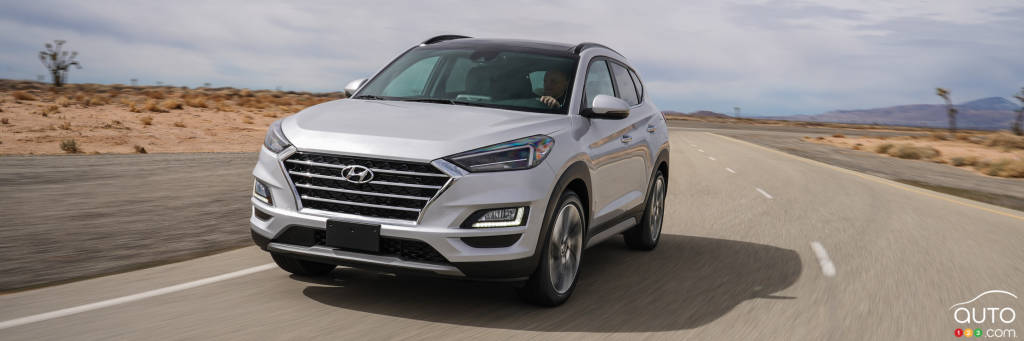
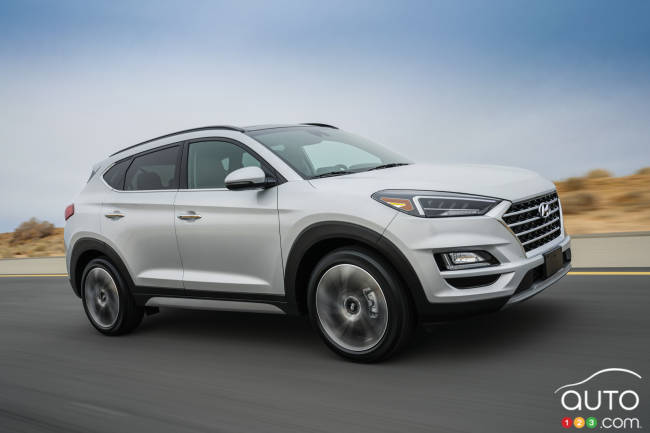
There’s no time to rest when you’re keeping pace with popular compact SUVs like the Honda CR-V, Nissan Rogue, Toyota RAV4 and Volkswagen Tiguan. That’s why the 2019 Hyundai Tucson has received a mid-cycle update to keep it competitive in terms of comfort, safety, cargo space, technology and overall value — in other words, pretty much everything people are looking for and expect in an affordable and practical compact SUV.

As we’ve discovered in comparison tests and reviews, the 2019 Hyundai Tucson doesn’t stand out in any one key area. That doesn’t mean it gets lost in the crowd, however: We found the new Tucson to be competent on the road, and a great value when you start adding options. A new engine provides smoother driving behavior compared to the previous model, too. And even the Tucson’s smaller size can be an asset for anyone who prefers an SUV that’s easier to park.
A few things could use fixing, however. This includes the Tucson’s mediocre fuel economy, some chintzy cabin materials and the lack of some tech items found on rivals.
But for a quick rundown about the SUV’s highs and lows, just keep reading. Here are eight things we like, and four we don’t, about the 2019 Hyundai Tucson:

Things We Like

1. Smooth Powertrain

A previously optional turbocharged four-cylinder engine goes away and, in its place, Hyundai now offers a naturally aspirated 2.4-liter four-cylinder. This engine produces a total of 181 horsepower and 175 pounds-feet of torque. The torque figure is less than what the outgoing turbo 1.6-liter engine provided, but during our time with the Tucson, we discovered the 2.4-liter and six-speed automatic are more refined and better-behaved in all driving situations. Granted, the turbo motor had more punch from a standstill. Yet the 2.4-liter four has plenty of power for routine driving, and gearshifts are smoother than before. For the 2019 model year, the Hyundai Tucson comes standard with a 161-hp, 2.0-liter four-cylinder coupled to a six-speed automatic transmission, which carries over from 2018.

2. More Safety Features

The base version of the Hyundai Tucson is fitted with forward collision warning, automatic emergency braking and lane keep assist. Moving up one trim level nets you blind spot monitoring and rear cross-traffic alert. Other available safety items include automatic high beams, driver attention alert and adaptive cruise control. For 2019, the Tucson earned a Top Safety Pick rating from the Insurance Institute for Highway Safety.

3. Flexible Cargo Area

We’ll be the first to admit the Tucson doesn’t have the sheer cargo-toting capacity of some rivals. Both the Honda CR-V and Nissan Rogue have about an 8-cubic-foot advantage over the 31 cubic feet of room the Hyundai provides behind its backseat. But this comparative shortfall doesn’t make the Tucson cramped or impractical; in fact, a two-tier cargo floor creates a handy flat surface when the rear seatbacks are folded down. You then have the option of storing items you want kept out of view beneath this stacked floor. A smart and convenient hands-free tailgate — which requires no button pushing or wagging feet under rear bumpers — is also optional.


4. Smaller and Easier to Maneuver

We’ve noted that the Tucson is smaller than competing compact SUVs, including the Rogue and CR-V. This could appeal to shoppers who don’t need all that acreage, particularly if parking is at a premium. Thanks to its slightly scaled-down proportions, the Tucson could be a better choice for city-dwelling SUV buyers.

5. Better Ride Quality Than Before

Ride quality in the 2019 Tucson takes a solid step in the right direction, particularly in higher trim levels. In our review, we credited this to Hyundai fitting upper trims with 18-inch wheels versus the 19-inch wheels used previously. Bigger wheels look cool, but they can make for a rougher and more jittery ride.

6. Great Warranty

Hyundai offers an excellent warranty and that alone could catapult this compact SUV to the top of many shopping lists. This includes five years/100,000 kilometers of vehicle coverage, along with 10 years/100,000 miles of powertrain coverage. A strong warranty can be a major selling point for anyone looking to purchase an SUV versus taking out a lease.


7. Value Leader, Especially in Top Trims

Ironically, the 2019 Hyundai Tucson becomes a better value the higher up you go in the trim levels. The base trim price (all prices include destination) is already very competitive. Step up to the Tucson Ultimate, which comes fitted with loads of comfort and safety touches, and you’ll see the price difference between the Hyundai and key rivals works even more to the Tucson’s advantage. A Tucson Ultimate with all-wheel drive costs much less than a similarly equipped Honda CR-V or Toyota RAV4.

8. Intuitive Infotainment System

The 7-inch touchscreen in the Tucson is simple to use, with clear controls and menus. Standard touches like Android Auto and Apple CarPlay compatibility are nice to have onboard, too. (A larger 8-inch screen is offered with the range-topping Ultimate trim.)


Article source: https://www.cars.com/articles/2019-hyundai-tucson-8-things-we-like-and-4-not-so-much-404460/


Tuesday, 26 February 2019

Quick Facts to Know: 2019 Hyundai Santa Fe


The Hyundai Santa Fe is the Korean-based brand’s best-selling SUV in the United States. For the 2019 model year the Santa Fe lineup is being completely revamped. An all-new five-passenger crossover is assuming the Santa Fe name, while the former three-row Santa Fe will now be called the Santa Fe XL.
The smaller Santa Fe Sport that in 2018 slotted between the Hyundai Tucson SUV and the standard Santa Fe has been dropped for 2019. The new two-row, five-passenger Santa Fe could be viewed as the successor to the 2018 Santa Fe Sport.
An all-new three-row SUV larger than the current Santa Fe is also in the works. It will be launched with a new model name.

Here’s a summary of the 2019 Santa Fe’s specifications:

TRIMS

  • The 2019 Hyundai Santa Fe is available in seven trims: SE, SEL, SEL Plus, Limited, Limited 2.0T, Ultimate, and Ultimate 2.0T.
  • Front-wheel drive is standard with all-wheel drive available on every trim.

DIMENSIONS

  • The 2019 Santa Fe has a wheelbase of 108.9 inches, an overall length of 187.8 inches, and a width of 74.4 inches.

POWERTRAIN

  • The 2019 Hyundai Santa Fe comes with a 2.4-liter four-cylinder engine that has 185 horsepower and 178 pound-feet of torque.
  • Limited and Ultimate trims are available with a 2.0-liter turbocharged four-cylinder engine that has 235 horsepower and 260 pound-feet of torque.
  • All 2019 Santa Fe models have an eight-speed automatic transmission with a manual shift mode.

TOWING

  • The Santa Fe is rated to tow up to 2,000 pounds with the 2.4-liter engine and 3,500 pounds when equipped with the 2.0-liter engine.

MILEAGE

  • The 2019 Santa Fe equipped with front-wheel drive and the 2.4-liter engine has EPA-estimated fuel economy ratings of 22 mpg in city driving, 29 mpg on the highway and 25 mpg combined. With all-wheel drive, the fuel economy ratings are 21 mpg city/27 mpg highway/23 mpg combined.
  • When equipped with the 2.0-liter turbocharged four-cylinder engine, the Santa Fe has EPA-estimated fuel economy ratings of 20 mpg in city driving, 25 mpg on the highway, and 22 mpg combined. With all-wheel drive, fuel economy ratings are 19 mpg city/24 mpg highway/21 mpg combined.

SAFETY

  • The 2019 Santa Fe comes with driver attention warning, forward collision avoidance, pedestrian detection, radar cruise control, blind spot monitor, lane keep assist, rear cross-traffic warnings, and a rearview camera.
  • Rain-sensing wipers, parking distance warnings and rear occupant alert are available in SEL Plus trims and above.

INFOTAINMENT

  • The 2019 Santa Fe comes with a 7-inch color display, Bluetooth hands-free phone and Apple CarPlay/Android Auto.
  • SEL, SEL Plus, and Limited models come with a 7-inch screen that includes Bluetooth streaming audio, SiriusXM radio and HD Radio.
  • Santa Fe models with Ultimate trim come with an 8-inch screen that include navigation and traffic information, surround-view camera, heads-up display, and wireless smartphone charging.

COMFORT & CONVENIENCE

  • The Santa Fe’s standard equipment includes cloth seating, power windows/door locks, remote keyless entry, LED running lights and five passenger seating.
  • All but the base SE trim level offer optional power front seats, heated seats, proximity key system with push button start and dual-zone automatic climate control.
  • Limited and Ultimate trims are available with a panoramic sunroof and leather seats.


Outsider’s Review: Hyundai Accent

Hope you enjoy this review of the Hyundai Accent that we found - it’s a fun read.

This week, we’re reviewing the 2019 Hyundai Accent four-door sedan, the all-new in sub-compact introduced in 2018. Completely redesigned, this fourth-generation Accent features more standard features and is available only as a sedan in ’19 as the hatchback trim is discontinued.
Most impressive is Accent’s new sedan style exterior, which closely resembles its larger siblings compact Hyundai Sonata and mid-size Elantra. In particular, both the front and rear designs of the new Accent now mimic the other Hyundai sedans in much the same manner other manufacturers do when branding a car family design.
Our Accent featured its new cascading grille and impressive rear tail light design that will receive more admiring glances from prospective consumers aged 19 to 90. Accent also delivers good fuel economy and the 10-year, 100,000 mile warranty still attracts more interest than competitors that don’t offer a similar warranty.
Powertrain and fuel mileage are significant as all three 2019 Accent sedans arrive powered by a 130-horsepower, 1.6-liter inline four-cylinder that delivers 119 lb. ft. of torque. The EPA numbers are 28 city and 38 highway are both good for the smaller car class although several competitors go 40 MPG on the highway. The engine mates to a Shiftronic six-speed automatic with ECO (economy) mode (standard on SEL and Limited and optional on SE). For those who still like to shift, a six-speed manual transmission is available only on the entry SE model only, and fuel mileage drops just a bit to 28 city and 37 city, the latter one less than the six-speed automatic.
Inside, a new dashboard highlights an upgraded interior where driver and passenger will no doubt be impressed by a feel of more roominess not found in prior Accents. Be it the entry SE to, mid-level SEL, to our test-drive Limited, all Accents are impressive. Additionally, every 2019 Accent now offers standard tilt steering wheel with audio and cruise control functions plus Bluetooth activation. There’s also Smartphone, USB, MP3 and auxiliary input jacks for numerous applications across the 2019 Accent standard feature lineup. When you move up to the SEL and Limited, upgrades include Apple CarPlay and Android Auto coupled with a nice stereo system.
As for comfort, the new Accents offers a nice interior even on the entry SE, and then adds additional amenities corresponding to price increases for the SEL and Limited models. On the highway, the little Hyundai handles very well and is a pleasure to drive. It feels bigger than it is thanks to the new interior.
A notable standard feature available only on the Limited is the highly regarded forward collision avoidance, which joins the other standard safety features found on each and every Accent like rearview camera, anti-lock four wheel brakes, all the airbags, traction controls and more. A driver blind spot mirror and hill start assist come standard on the SEL and Limited models, while both also feature an upgraded Bluetooth with voice recognition versus the standard non-voice Bluetooth on the entry SE. Again, if you want forward collision avoidance, it’s not available on the SE and SEL models, not even as an option. Ditto on the SEL’s standard heated front seats, also unavailable on SE and SEL. If you opt for the SE, it comes with drum rear brakes instead of discs.
Comfort and convenience deserve note, as the Limited features a power sliding sunroof, fog lamps, daytime running lamps, seven-inch touchscreen, six-speaker Sirius XM with 90-day free service, 17-inch tires on nice alloys, hands free trunk opening, cruise control, all the powers, automatic temperature control with windshield defogging, leather wrapped steering wheel and shift knob and more. Your Hyundai dealer awaits your visit to answer all questions and see the 2019 Accent.
Important numbers include a wheelbase of 101.6 inches, 11.9 gallon fuel tank, 33.5 ft. turning circle, 17-inch tires on alloy wheels, 2,679 lb. curb weight, and 13.7 cu. ft. of cargo space. All Hyundais come with the famous 10 year/100,000 mile limited powertrain warranty.
As long as you’re not planning to compete in acceleration contests, there’s much to like about the new generation Hyundai Accent. If shopping this small car class, the Accent should be on your test drive list and I recommend starting with the mid-level SEL and decide from there if the Limited is better suited.
Remember, Hyundai is known for discounting handsomely on both brand new and leftover models, so check with you dealer on current incentives. (A 2018 leftover might be your very best deal.)


2019 Hyundai Tucson: Redesigned and More Tech-Savvy


Hyundai has released details for its redesigned 2019 Hyundai Tucson (and U.S. pricing, but we’ll wait for the Canadian announcement for details on what consumers here will be paying). And while it’s not getting the major makeover that its fellow Hyundai SUV the Santa Fe is this year, it is benefiting from a number of upgrades.

Keep in mind that these are details for the U.S. version, and may vary slightly from what Canadian buyers are offered. Here are the details.

The looks
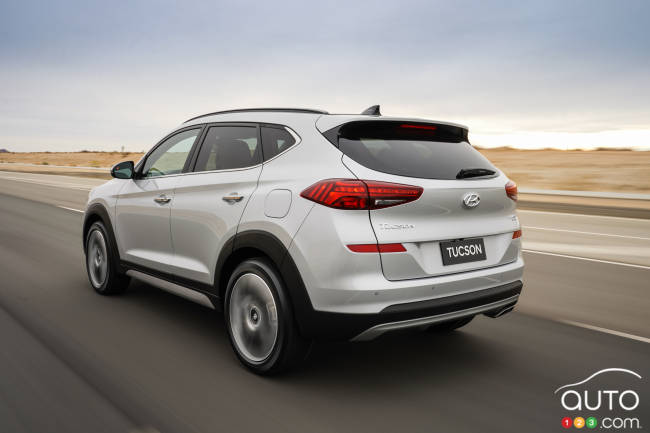
The 2019 Tucson leads with a new cascading grille and rides on redesigned 17- or 19-inch wheels, plus Hyundai is now offering a new 18-inch wheel option. The design of the headlights is also new, as are the front and rear fascia. The SEL trim and up get a redesigned exhaust finisher.


The interior
Inside, Hyundai’s designers gave the 2019 Tucson new designs for the centre stack, the panel vents, the leather seating and even the rearview mirror. The instrument cluster has also been modified in appearance.

The trims
Hyundai in the U.S. has different trim designations for the Tucson, which means we don’t know yet what impact if any its decision to reduce the number of trims available to American consumers (from 6 to 5) in 2019 will have on the Canadian version. As with the pricing, we’ll have to wait for that information.

The power train
As part of its changes to the product catalogue for the 2019 Tucson, Hyundai is getting rid of the 1.6L turbo engine with 7-speed DCT transmission, leaving two engine options available to U.S. buyers. The base model comes with a 2.0L 4-cylinder engine wedded to a 6-speed SHIFTRONIC automatic transmission, and front-wheel drive. All-wheel drive is offered as an option with every trim level. The other engine that comes into play higher up the trim scale is a 2.4L 4-cylinder engine with the same 6-speed transmission.


Safety and drive assist
The 2019 Tucson now comes equipped with forward collision alert, lane keep assist and an electronic parking brake as standard features. New available options include surround view monitor, intelligent cruise control and stop-start technology, and driver attention warning. Also available for the first time on the Tucson are high beam assist, rain-sensing wipers, a USB outlet in the second row and wireless charging.

Android Auto and Apple CarPlay integration is included and accessible via the 7-inch display.


Article source: https://www.auto123.com/en/news/2019-hyundai-tucson-details-photo/65252/

Hyundai Tucson facelift coming in May 2019

Updated Tucson gets styling tweaks and more features; engines likely to remain the same.

Hyundai will bring the updated Tucson to India in May 2019. The refreshed SUV made its global debut a few months ago at the 2018 New York motor show.
As part of the mid-cycle refresh, the Hyundai Tucson gets styling tweaks to its nose and a mild design update to the headlights, which are now full-LED units – at least on the top-spec trim. The grille now comes with Hyundai’s cascade look and the SUV also gets restyled bumpers and fog lamp housings.
The refreshed Tucson packs in multiple driver-assist features, including autonomous emergency braking and lane-keep assist. It also comes with a 360-degree camera and adaptive cruise control. The infotainment system gets an upgrade too, with an 8.0-inch screen with Apple CarPlay and Android Auto compatibility.
For India, expect Hyundai to continue with the same engine options – a 155hp 2.0-litre petrol and a 185hp 2.0-litre diesel. Gearbox options include a 6-speed manual and a 6-speed automatic. As far as safety goes, Hyundai is likely to offer Electronic Stability Control (ESC), hill assist and brake assist on all variants of the updated SUV.
The Tucson facelift will take on the likes of the Jeep Compass, the upcoming MG Motor SUV, the Volkswagen Tiguan and the Skoda Kodiaq in the Indian market.
The company has already begun work on the next-gen Tucson, which will come in 2021. This model will come with a seven-seat configuration and will get new features, like a head-up-display.

Article source: https://www.autocarindia.com/car-news/hyundai-tucson-facelift-coming-in-may-2019-410120